
Christmas Pudding Construction Day 8th Oct
What a fantastic sleep! I'm glad my watch was at the bottom of my bed because when Brian and Lorna started talking outside the tent and I had just decided to go back to sleep it was already midday. Started building breakfast while Brian was writing up his diary. What a treat; sausage, egg, tomato and potato, preceded by an apple and followed by bread and honeycomb. Welcome change, and of course, lunch can be dispensed with.
While I cooked brunch, Brian started on the Xmas pud. When all is mixed it looks right and tastes right, and with an Alka seltzer for baking powder, steaming begins at 2:30. It exactly fills the middle pan and as it rises it pushes its way out a little making a bulge in the tin foil. While this is happening I ring Mrs Obolensky, who says come for dinner tomorrow at 7:30. Since we have no more cooking pans we must go out to eat, to same "village restaurant". Soup, meat balls and stuffed aubergine and that delicious bread all for less than 13TL. Very good. Back to that pud, which is declared cooked at 7:00. The top is shaved off flush and eaten with brandy custard (the Greek custard powder is singularly insipid - being white and tasteless).
Topkapi Palace 9th Oct
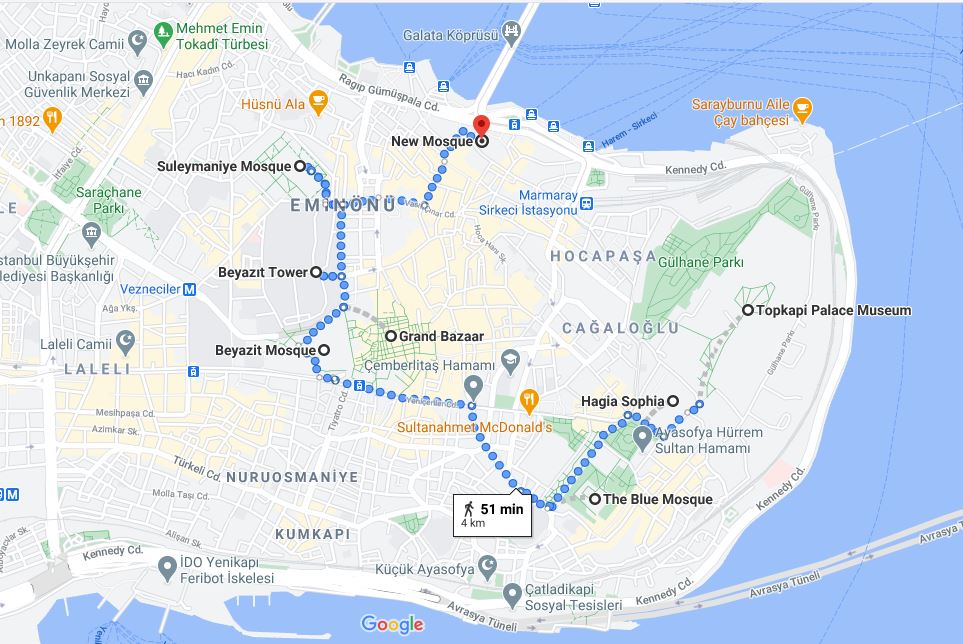
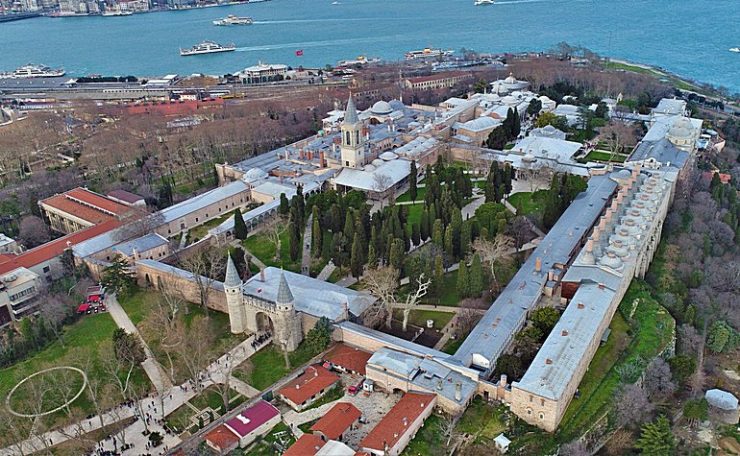
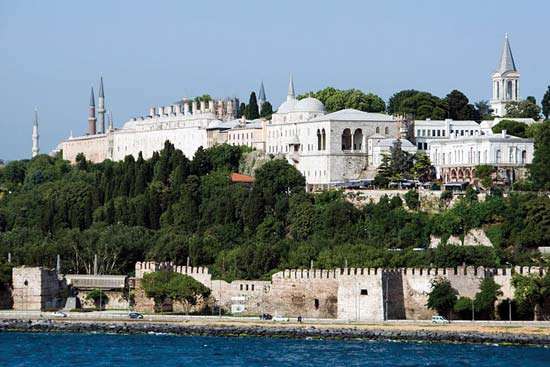
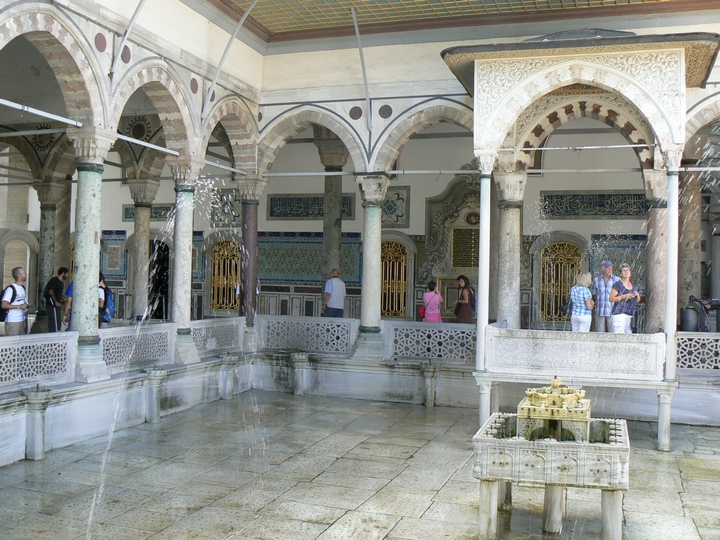
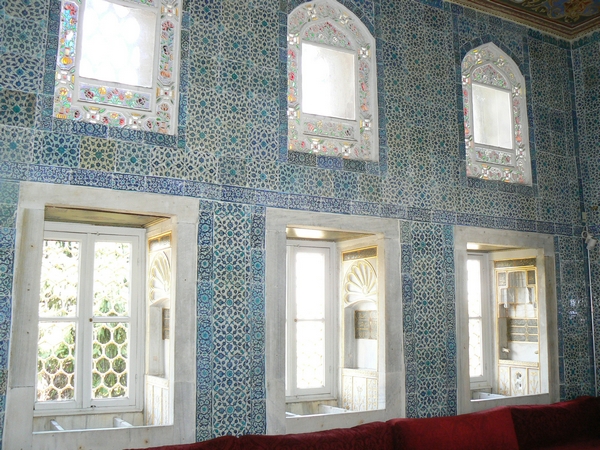
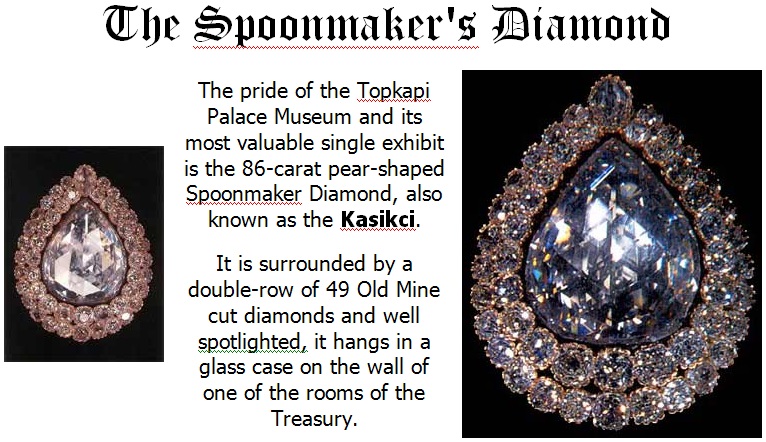
Rose at about 9 o'clock, prunes for breakfast then off into the city again. An 85-bus arrived so we leapt on it! For 1TL each we got taken all the way to the Topkapi Palace which was excellent. The Topkapi Palace built by the Ottomans in the 16th century. 4TL for entry, then you follow the signs round. Through Chinese and other porcelain, various kitchenware from the time when the palace was operational - rolling pin, parsley chopper and cauldrons were impressive. Turkish glass and porcelain. Sultans robes (c1200 - 1924), jewellery department with the Spoonmaker Diamond and vast emeralds and into the sacred rooms with the Koran and the Prophet's mantle and all that jazz. Next we visited two of the palace "kiosks", built like small mosques but intended for living in. The slightly eye-watering Circumcision Room is located in the sultan's innermost private sanctuary, now known as the Fourth Courtyard. Quick firkle round the grounds and back to the council chamber, passing Ahmet III library on the way, and the armoury collection of swords, muskets, rifles, halberds, lances, bows and arrows, maces and other nasties. Finally, we looked at the state coaches. The suspension systems are fascinating.
So, as usual, it is food time. Down to the same chapatti restaurant where we even have the same menu. It is hair cutting time and we go to a nearby knife and fork man, who gives me quite a reasonable cut for 5TL. His minion does Brian a little more peculiarly, but it's all right. When we rise a lad says Brian looks like a Yank, to which Brian takes exception and raises his fist, looking menacing. The lad disappears sharpish. That trauma over we go across Golden Horn to second-hand bookshop, where, after long deliberation, we buy "Lincoln and the American Civil War" and "Catherine the Great".
It is now time to go "home" to prepare for dining out. Down to Aksaray Square and onto minibus (where four of us crowded onto back seat - Brian rather large for such things). Shower change and off in search of Sergei's place. Lost in airport and couldn’t find Yesilkoy's railway station, but soon got there. Shown how to open gate by their faithful Tartar. Lovely people and lovely meal. Sergei promises to get tobacco and cigars. Ataturk is the gent who reformed Turkey after the First World War, and who appears on all the photographs. Advice is again to take southern route through Turkey.
Mrs Obolensky tells some alarming stories about living in Turkey. They have had nine robberies and one murder in their house while living here! Thieves, when caught, have their punishment and are then expected to be "friends" with their "hosts" again. The whole place is very strange. If you are foreign, Christian and a woman you are about the lowest form of human life.
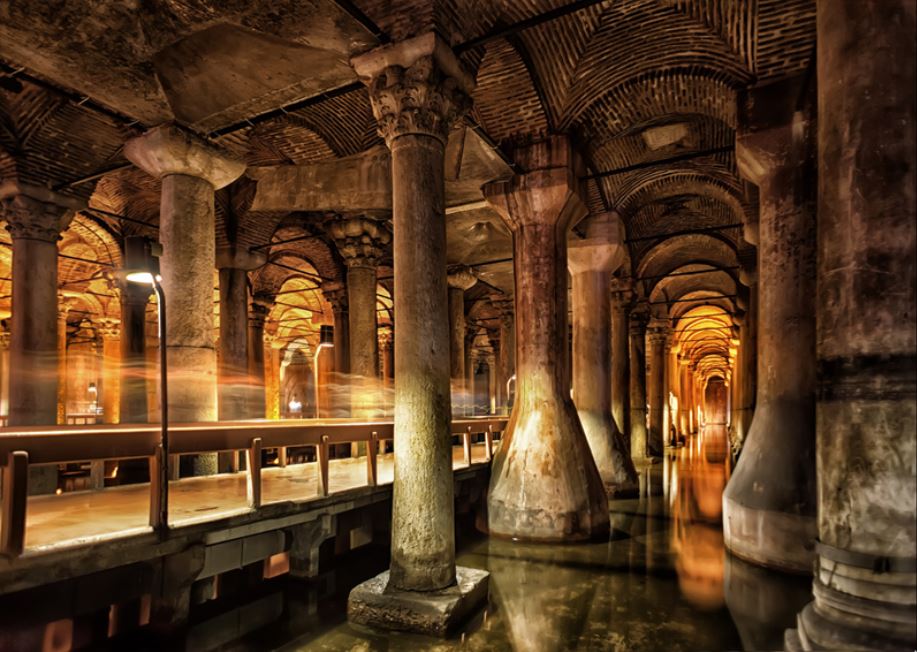
Basilica Cistern - must see
During our 2009 visit to Istanbul Judy and I discovered this magnificent underground remnant of the ancient city water supply system which could hold 80 million litres. It was built in 532AD using columns "salvaged" from ruined temples, hence the features on some of them. It is likely that it was used for at least 500 years until the Byzantine emperors relocated from the Great Palace. It was then used as a dump until 50,000 tons of mud and rubble were removed in 1985 and it was reopened in 1987. Constantinople had many such cisterns.